Plant Responses to Fire
By Louisa Evers, Golden Eagle Audubon Board Member
Whether a plant survives a fire or not depends on how much heat it receives and for how long. The generally used definition of lethal temperature for plants is 140ºF for 1 minute. Higher temperatures will kill a plant more quickly, but lower temperatures can kill a plant if the temperatures last long enough. One way to think of this is whether the flames (high temperature, usually short duration) or smoldering (lower temperature, usually long duration) is the culprit. Sometimes fire will damage a plant without killing it outright, leaving it more vulnerable to death from other factors such as insects, disease, and drought.
Other factors besides temperature and time include where the meristems (growing points) are located, bark thickness in trees, presence or absence of volatile compounds in the bark or leaves, and the moisture content of various parts of the plant. In addition, while most of the heat of a fire goes up into the aboveground parts of a given plant, a certain amount also goes down into the soil and may or may not adversely affect the belowground portion of the plant. Plants that are actively growing are more sensitive to heat than plants that have finished growing for the season. Large buds and large trees are less susceptible than small buds and small trees.
Lastly, the moisture content of the soil matters for whether belowground plant parts or seeds are killed. Water is a good insulator, and moist soils can be better protected than dry soils. However, like any good insulator, once the water is heated enough, it holds that heat and can result in a higher temperature-time impact. So determining plant mortality can be complicated.
Crown Mortality
Meristems can be located above or below the ground, depending on the plant species. Herbaceous plants tend to have meristems at or below the soil surface while woody plants can have meristems on the roots, root collar, trunk or bole, and crown. How far belowground matters as soil has insulating properties. For example, Idaho fescue has meristems just above the soil surface, Thurber’s needlegrass has meristems just below the soil surface, and bluebunch wheatgrass has meristems at least half an inch below the soil surface. As a result, Idaho fescue is most vulnerable to fire, Thurber’s needlegrass is moderately vulnerable, and bluebunch wheatgrass is least vulnerable of the three species.
In conifers, few trees can survive complete loss of the crown. Very healthy ponderosa pine can, but growth is adversely affected for several years. The larches are deciduous and can survive complete consumption of the crown as long as buds survive. Deciduous trees are more likely to survive complete crown loss, particularly since the shape of the crown and leaf chemistry means that the crown is more likely to be killed by scorch instead of consumption. Scorch occurs when the heat is intense enough to kill the leaves, but they turn brown and remain on the tree. Most conifers cannot survive complete or nearly complete crown scorch or consumption, but healthier conifers can survive less than 50 percent scorch or consumption.
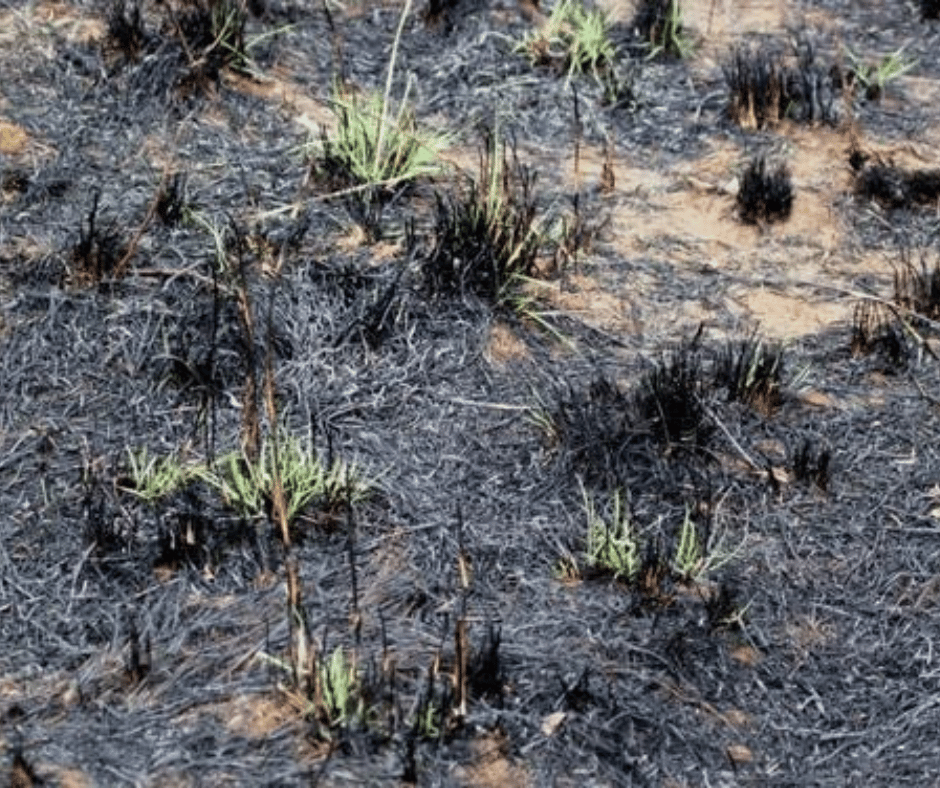
Resprouting grass (Wild Nature Institute)
Stem Mortality
Stem mortality can refer to damage to the cambium of a woody plant or consumption of the stem of an herbaceous plant. The cambium is the living part of a woody plant, usually a thin layer just under the bark. How long bark insulates the cambium depends on bark thickness, surface characteristics (tight, shreddy, or furrowed), and how corky the bark is. On trees in particular, the size of the tree and its position on the slope help determine how much of the cambium is exposed to how much heat. Trees with a small diameter and thinner bark are more likely to succumb completely while trees with a large diameter and thicker bark may suffer mortality on only part of the tree.
Shrubs vary more in their response to stem damage, in part because shrubs typically have multiple stems and thin bark. Very low intensity, short duration fire may kill some stems on an individual shrub but may not kill all stems. Shrubs also vary in how well they resprout, but much less is known about individual species. For example, big sagebrush does not resprout; antelope bitterbrush may or may not resprout, and rabbitbrush often resprouts vigorously.
Root Mortality
Roots are often protected from fire by the soil, but some root mortality can occur. Fine roots located close to the soil surface can be killed readily. Loss of some fine roots may not be a problem but can affect plant recovery. Decades of fire exclusion in ponderosa pine forests have made them more vulnerable to root mortality. Ponderosa pine has flaky bark, and those flakes build up around the base of the tree. These mounds of bark and needles support long-term smoldering combustion that can last for days or even weeks, killing the roots and girdling the tree.
A less well studied form of root mortality occurs because tree roots are often interconnected between members of the same species. Fire burning in the stump of a dead tree can continue down the roots and result in the mortality of living roots of the adjoining tree or trees. The degree to which this form of root mortality leads to the death of the living trees is not known.
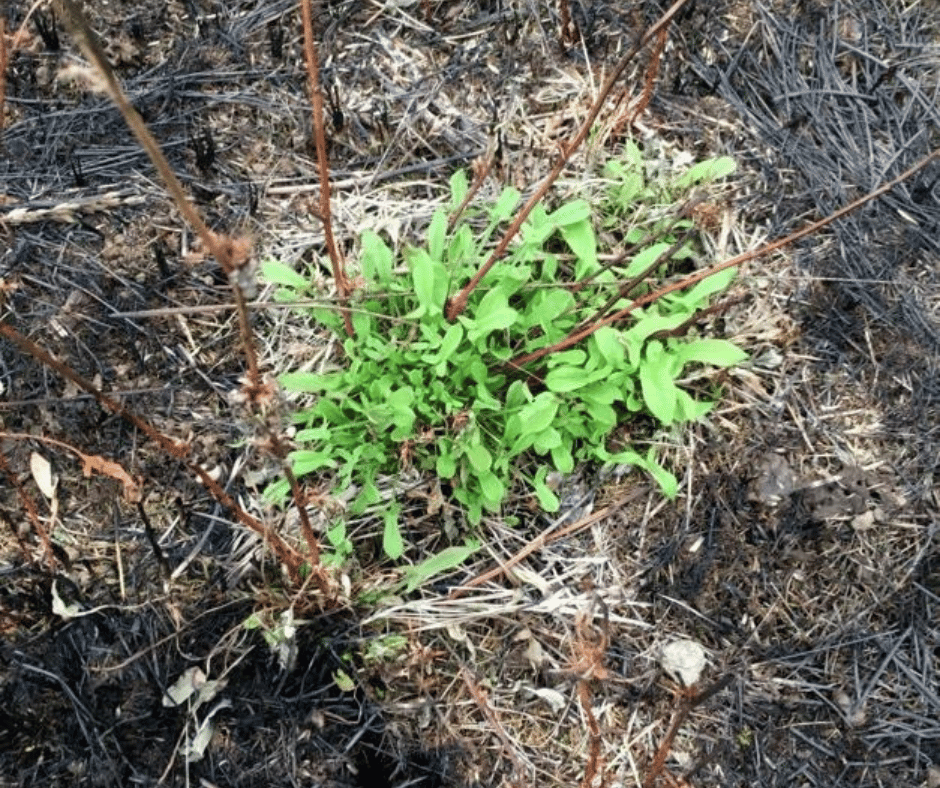
Resprouting shrub (Bryan Ribelin)
Vegetative Regeneration
Certain plants, mostly shrubs, deciduous trees, and many herbaceous plants can recover from a fire by resprouting from underground plant parts. These parts may consist of dormant buds in the root collar or roots, rhizomes, taproots, corms, tubers, lignotubers, or similar structure. Vegetative regeneration is often the most common recovery method for shrubs and herbaceous plants.
Seed-based Regeneration
Some species appear or recover from fire via seeds. Seeds may be stored in the canopy or in the soil or they may be brought in by animals, wind, or water. The best-known example of recovery from canopy-stored seed is from conifers with
serotinous cones, such as lodgepole pine. Serotinous cones are sealed by resin or wax and require heat from a fire to melt the resin or wax and allow the cone to open and release the seeds.

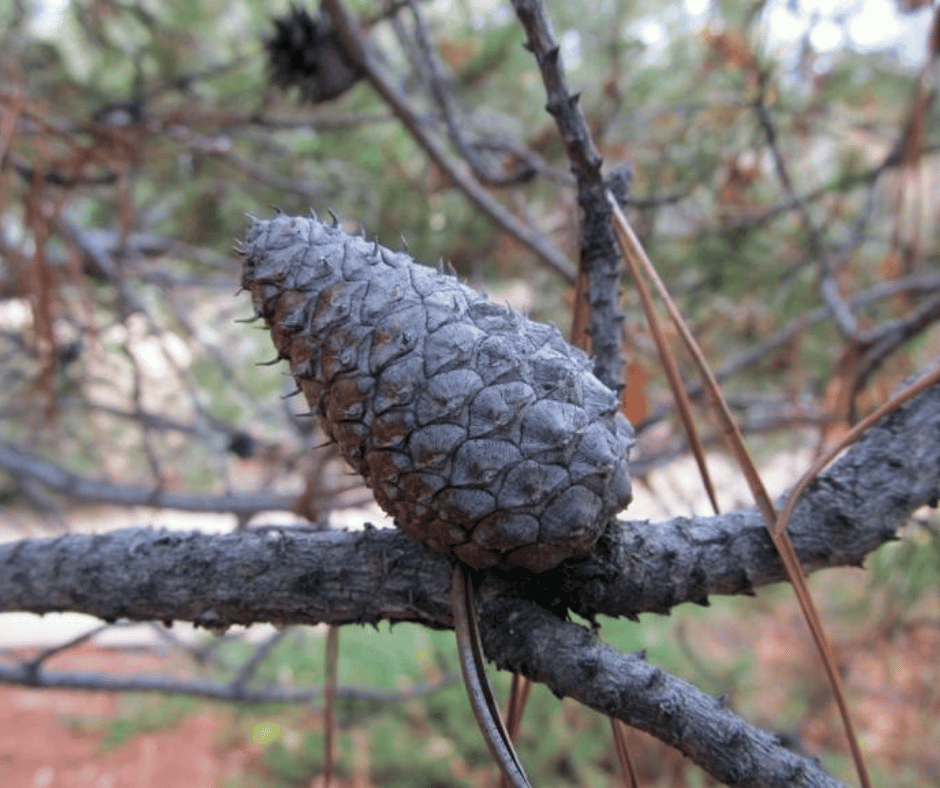
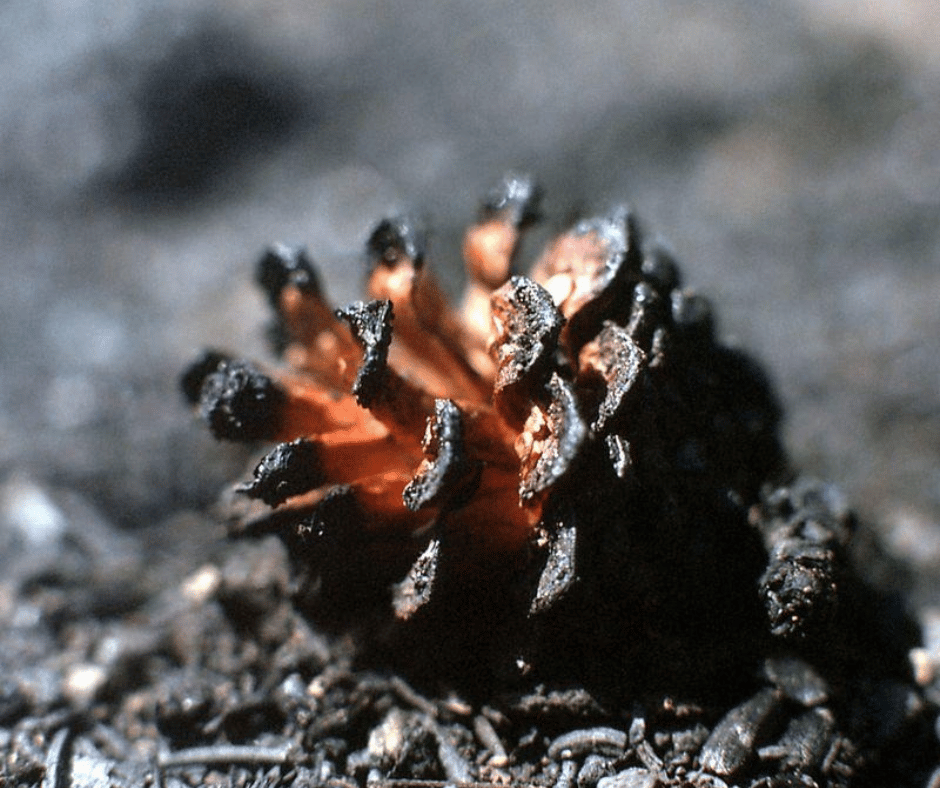

Other conifers depend on seed from living trees within or adjacent to the burn area. Conifer seeds have a wing that allows the seed to travel some distance from the tree, although that distance is limited by the height of the cone and the strength of the wind at the time of release. Certain conifer seeds germinate better on burned sites than unburned sites; usually these are species that require a lot of sun to grow, such as pines and larch. Trees that can establish in shade often do not require a burned site, such as true firs, western redcedar, and spruce.
The post-fire seed establishment requirements for deciduous trees and shrubs that grow in the West are less well studied. Birds and rodents are best known as seed dispersers, but seeds may also arrive in the manure of larger animals. Certain birds, such as jays and Clark’s nutcrackers, and certain animals, such as squirrels and chipmunks, cache seeds for later consumption but don’t always find all their caches before the seeds germinate. Birds that consume berries, such as thrushes, may excrete seeds into the burned area.
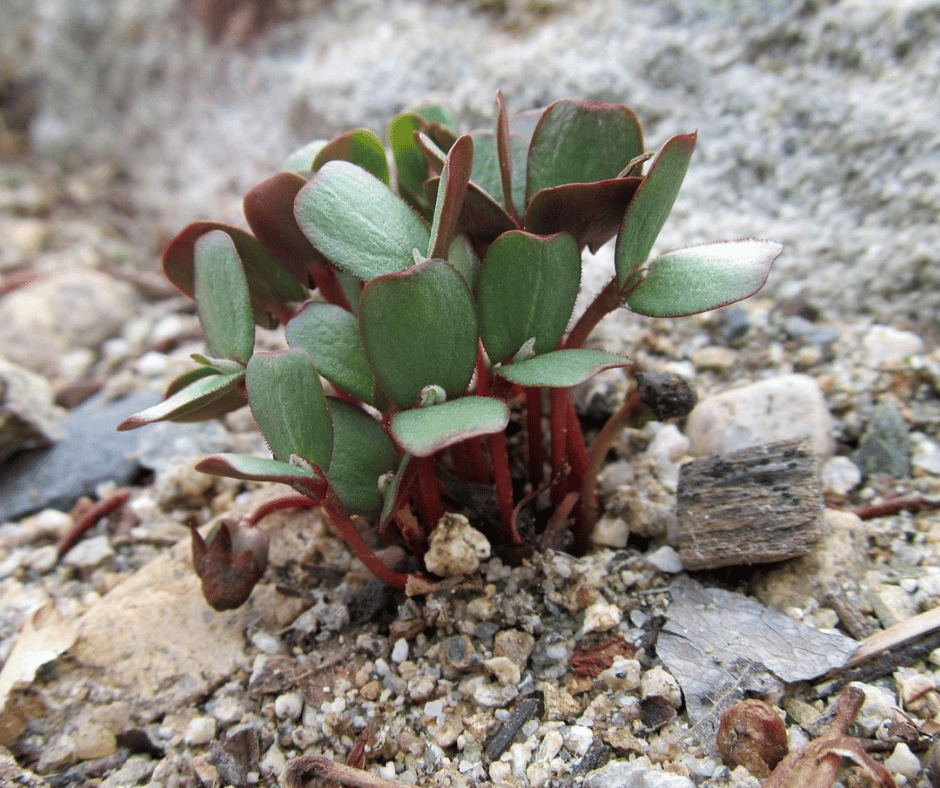
Antelope bitterbrush seedlings from a rodent cache (awkwardbotany.com)
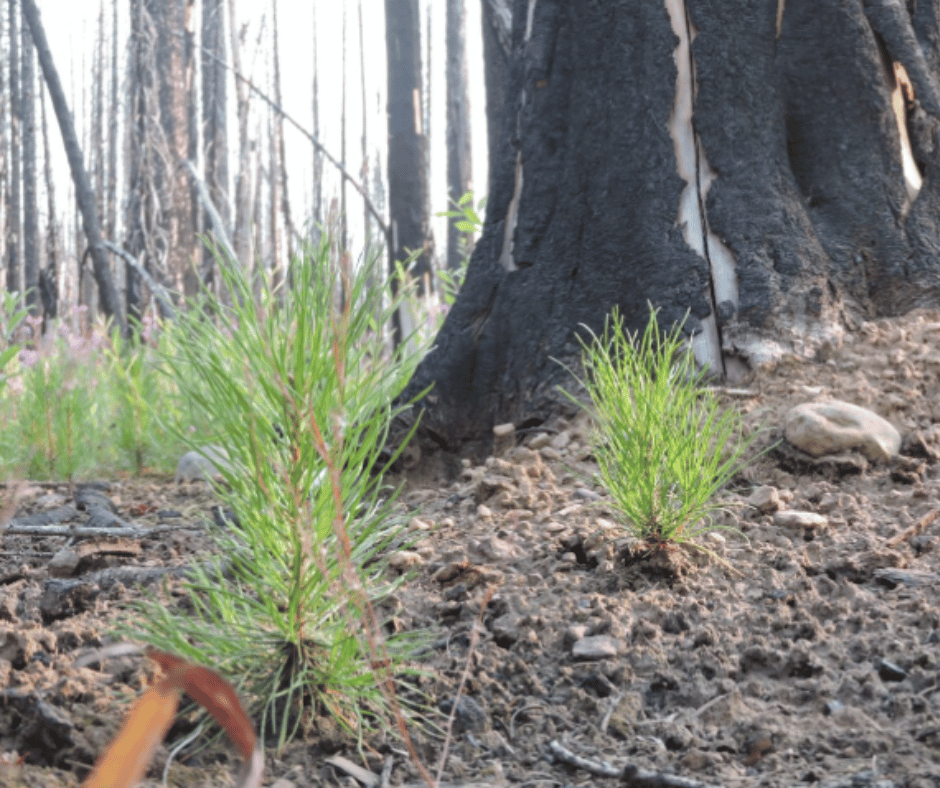
Conifer seedlings
Shrubs and herbaceous plants may have seed stored in the soil, known as a seed bank. Some of these seeds can be very long-lived. Ceanothus species, a type of shrub, may have seeds that can live for several hundred years. Generally, sites characterized by long fire return intervals tend to have species with long-lived soil-stored seed while sites characterized by short fire return intervals tend to have species with short-lived soil-stored seeds, only a few years at most. The seed longevity of only a few species has been studied.
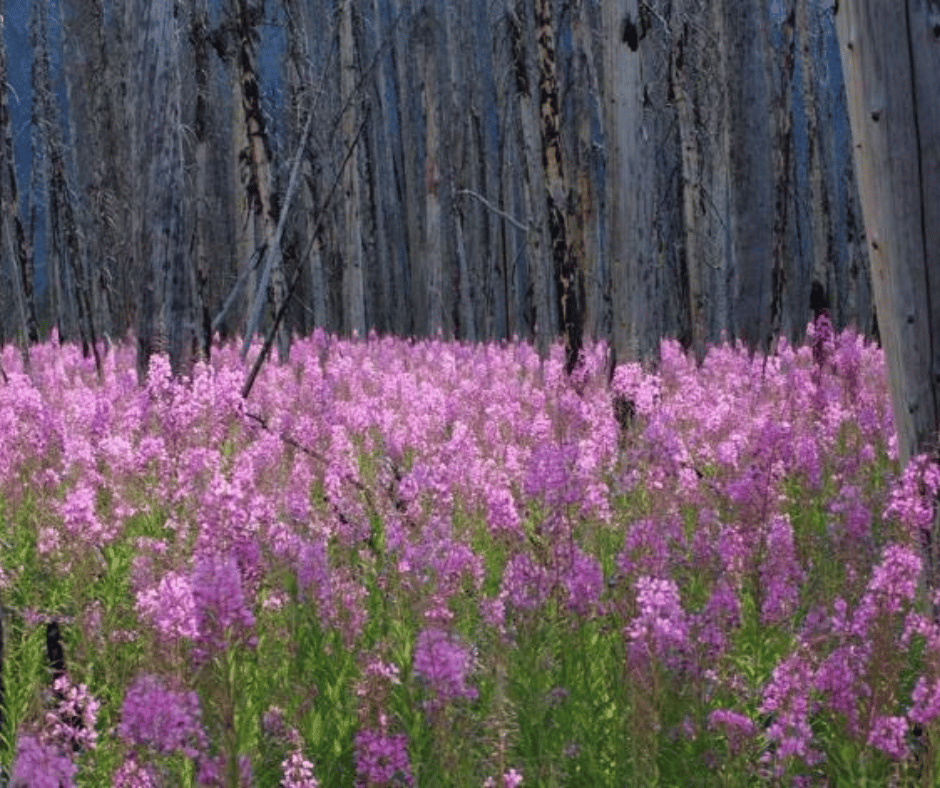
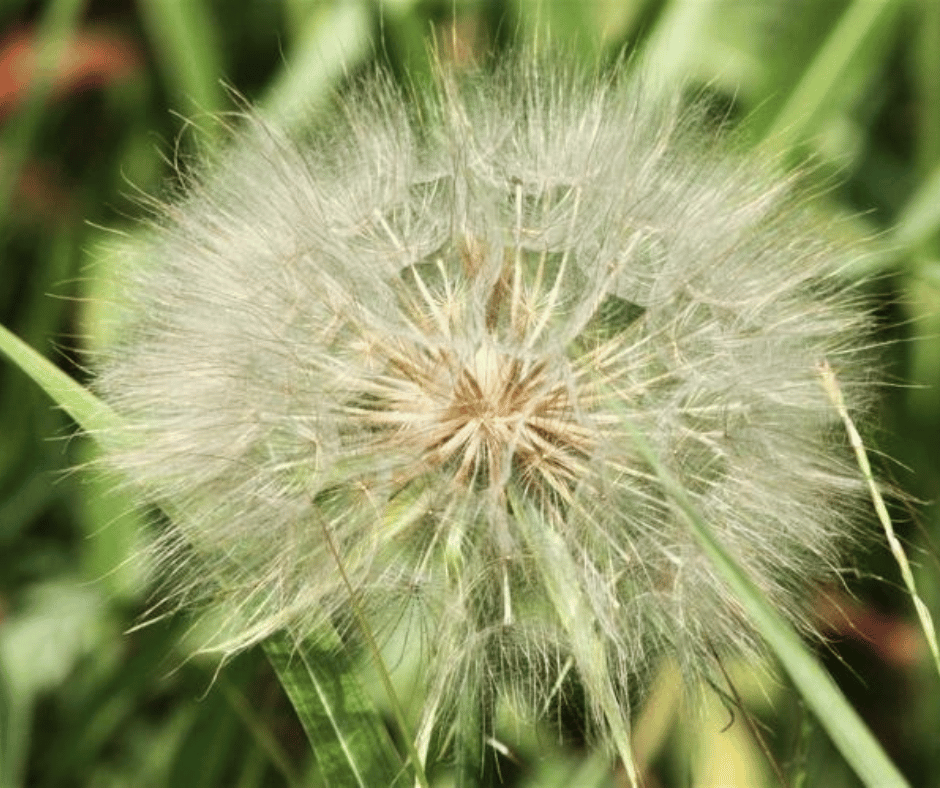
Seeds or sprouts may also reach a burned area from adjacent unburned areas and unburned islands. Wind is one of the most common seed dispersal methods into a burned area. Many herbaceous plants and some woody plants have seed types easily dispersed by wind. Members of the composite family, including many invasive plants, have wind-dispersed seed. Fireweed is a native plant that can reach a burned area via wind-dispersed seed or via rhizomes (underground stems).
Less commonly, seeds can reach a burned area via water, either along a stream or redistributed from outside or within the burned area via overland flow.


Conclusion
Despite all these methods for plants to recover from a fire, the most common result is that the plants that were there before the fire are also there after the fire. Unexpected plants typically come from the seedbank, seed caches, or enter via wind or water. What plants are initially dominant depends on the size of opening created, how deeply lethal temperatures are reached in the soil, and weather conditions after the fire. Some plants are stimulated to grow or flower after a fire, and some are killed outright and must come back from seed. Over time, which plants become dominant changes. So-called full recovery, looking more-or-less like it did before the fire, can take a few years in the case of moist or wet meadows or several decades in the case of many forests, or may result in a permanent shift, such as conversion of sagebrush steppe to invasive annual grassland.
Source: Much of this blog is based on the key reference Wildland Fire in Ecosystems: Effects of Fire on Flora published in 2000, by the Rocky Mountain Research Station with support from more recent research papers and other publications.
Editor’s Note: Louisa has a professional background in fire ecology and many years experience assessing fire risk and predicting fire behavior. Read her previous blogs for more information.
July 25, 2025 Wildfire a Primer on Behavior
August 26, 2025 Fire Behavior Triangle
October 29, 2025 Types of Wildland Fires
March 9, 2026 Introduction to Fire Ecology